
Episode 326
Surety for Treasurers
In this episode, Craig Jeffery and Jack Rosenberg discuss surety for treasurers, highlighting its difference from insurance and its key use cases. They cover the challenges surety helps solve, its evolution, and why it’s more relevant for treasurers today. The conversation also touches on practical examples and its growing importance in various sectors. Listen in to learn more.
Learn more about Rosenberg & Parker at suretybond.com.
Host:
Craig Jeffery, Strategic Treasurer


Speaker:
Jack Rosenberg, Rosenberg & Parker


Subscribe to the Treasury Update Podcast on your favorite app!



Episode Transcription - Episode # 326: Surety for Treasurers transcript
Announcer 00:01
Craig, welcome to the Treasury Update Podcast presented by Strategic Treasurer. Your source for interesting treasury news, analysis, and insights in your car, at the gym, or wherever you decide to tune in.
Craig Jeffery 00:16
Welcome to the Treasury Update Podcast. This is Craig Jeffrey. I’m your host for today’s episode. The session is entitled “Surety for Treasurers.” I’m joined with Jack Rosenberg from Rosenberg and Parker. Jack, welcome to the Treasury Update Podcast.
Jack Rosenberg 00:34
Craig, it is fantastic to be here. So honored that you guys are having us.
Craig Jeffery 00:38
Glad to have you on as well. You know, surety is not something that the majority of treasury people know really well. And there’s, there’s new and good opportunities. So this will be of great interest to the audience. And for those who are listening to this one directly, there’s a Coffee Break Session in the show notes on surety 101, and that Jon is interviewing jack on that one with a really good background for the foundational aspects of surety. We’re going to cover some of that ground again, but we’re going to go a little deeper. So Jack, maybe we could start off with, what is surety, and how can we understand surety compared to insurance? Like, how does it, you know, we think about it, it helps manage risk. So how do you compare and contrast.
Jack Rosenberg 01:21
That it’s the right place to start, and if people listen to the Coffee Breaks, they’ll see this. But I struggle to explain surety without talking about insurance, like I just it’s hard, and part of that is because they’re similar parties. Sureties are just divisions. For the most part, there’s a small amount of pure play surety companies, but for the most part, 95% of time sure these are part of larger insurance companies. Nationwide has a surety division, Chubb has a surety division, travelers, liberty, all have surety divisions. There’s also big insurance companies that don’t have surety divisions. AIG got out of the surety business. Like there’s there’s the progressive is more and more all state those are more consumer facing. They don’t have surety divisions, but almost every single surety is part of a larger carrier where it differs, and this is, again, I don’t know how to explain surety without explaining that it’s not insurance, but where it differs is, fundamentally, you have three parties instead of two parties. So Craig, when we were preparing for this, I give the exact same example, which is comparing surety to health insurance. So in America, health insurance comes through your employer, and it’s a two party transaction. They know people are going to get sick. You get sick, or, let’s say you have surgery. Once you’ve paid your deductible, you file a claim. You’re the insured, the insurance company, God willing, pays your claim. It’s as simple as that. There’s an insured. There’s an insurer. The insurer expects there to be claims. Let’s all hope they pay out the claims when we need the insurance surety three parties, and the example we always give is the paving of a road. So Rosenberger Parker is headquartered just outside of Philadelphia, Pennsylvania, in Wayne PA, right outside of our doors, is sweetsford Road, and I can’t remember if sweetsford Road is a county road or a state road, or something in between, but let’s pretend it’s a state road for today. That way I can just use the Pennsylvania Department of Transportation. So let’s say the Pennsylvania Department of Transportation, they’re putting out the paving of the stretcher sweets for road that is right outside our office. Let’s say it’s the two mile stretch outside of our office. Craig and let’s say Craig’s construction company and Jack’s construction company are both bidding on on that on that road. Craig you bid 2 million. Jack builds two and a half. Craig you your lowest bid. You win. So because it’s it’s it’s it’s put out by the state Pennsylvania bonds, all of its all of its road projects. For the most part, Pennsylvania Department of Transportation is going to require a performance bond. And Craig, let’s say your surety is nationwide. Nationwide is going to make a guarantee on behalf of Craig’s construction company that Craig You will pave the road in accordance with the contract for the $2 million that you bid and for Not a cent more. The claims process is where it really differs from insurance. Let’s say Craig, you go out of business. You go bankrupt in the middle of this job. Well, nationwide, steps in and they have two choices. They can either pay the Pennsylvania Department of Transportation $2 million hey, here’s your 2 million back. We’re good. Go find somebody else to pave your road. Or they can go hire somebody else. Let’s say they hire my contracting business to come in. Finish the job, because they view that as they can do that for less than $2 million that’s the economic calculation that they’re going to make there. Like we talked about in the coffee break. It’s like, well, hold on a second, you just had a claim, and the insurance company paid directly to the Pennsylvania Department of Transportation nationwide paid them. How is that any different than the health insurance model. And the difference is more easily explained where Craig’s construction company is not going bankrupt like the difference is fundamentally there, there was still a third party. There were still there was still Craig’s construction company. But it’s easier to see that when Craig’s construction company walks off the job, doesn’t go bankrupt and just says the Pennsylvania Department of Transport. Department of Transportation is being a bad actor, and we’re not dealing with this. We’re walking off the job. Craig’s business still intact. And here’s where it gets different. What governs the surety is writing a bond to the Pennsylvania Department of Transportation on behalf of Craig’s company, but what governs the relationship between Craig’s construction company and the surety is what’s called an indemnity agreement. And the indemnity agreement holds nationwide, holds the surety harmless for any losses. It’s more akin to, I think this would be more familiar for your audience, Craig. It’s more akin to a credit agreement in the sense that, like, hey, we have to pay you back if there’s a loss, and we’re still in business. So Craig, you guys walk off that job, and it turns out you’ve been running this business for a long time. You have, let’s say, 10 million in net worth and $5 million in the bank nationwide is going to come after you, and they’re going to say they’re going to hold up their indemnity agreement said, Craig, you signed this. You held us harmless against any losses. You just walked off that job. It cost us $1.2 million out of our own pocket to finish that job. You need to give us $1.2 million and there’s a lot of precedent in the courts for sure, he’s been able, being able to turn to their indemnity agreements and enforce them. So that’s how it’s different. It’s not just oh, there’s a loss. Insurance company pays out well, we expected this. It’s Oh, there’s a loss. First nationwide is going to see, do we have any recourse to Craig’s construction company, and they’re going to turn to their indemnity agreement? Because fundamentally, while insurance companies, when they’re writing insurance, they’re underwriting for a certain degree of claims. You know, in their perfect world, let’s say they write a billion dollars worth of premium, and they project $900 million worth of claims. And congratulations to that actuary. It came in on the.at 900 million, and they know their overheads 50 million. Well, great. They made $50 million in underwriting profit. Sureties are never trying to produce $500 million of premium and then say, All right, we’re gonna have $400 million in claims and losses. They’re trying to write $500 million in premium and have zero losses. That’s the big difference.
Craig Jeffery 07:54
So that makes sense. We talked about different number of parties as well. On the insurance side, we have the insured and the insurance company, and there’s obviously an insurance policy, so maybe we could fill in on the surety side. There’s a principal which is equivalent to the insured. Yep, there’s a surety company. And then the third one, which, which there’s no analog to the in the insurance environment, is who’s that third party.
Jack Rosenberg 08:20
That’s what we call in the surety world, the obligy. Since your, your audience based Craig, it’s a lot of treasurers. I know treasurers a lot of times in their remit is, is handling letters of credit. You can think of the obligy as another word for the counterparty. It’s the it’s the entity that’s demanding some amount of financial assurance, and that assurance is coming in the form of a surety bond. And I say assurance, not insurance assurance, right? It’s financial assurance that a contract will be performed, not just a construction contract. This can be any contract, but a contract, more generally, will be performed in accordance with the contract.
Craig Jeffery 09:01
So, if I’m the if I’m Craig construction company, I’m the principal, and let’s say, in your case, I can’t remember which insurance company is. They’re the they’re the surety, and then the oblige, or the counterparty would be the state of Pennsylvania, or my customer.
Jack Rosenberg 09:20
Yeah, your customer, exactly. And it’s not always. It’s not always. I just did we use that example, because roads are, everyone knows what a road is. Everyone’s seen roads being paved. It’s, that’s, that is universal. And I use the Pennsylvania Department of Transportation because government and municipal entities are, in general, big users of bonds. They definitely make up. You know, there’s more public and you know, municipalities or state governments or federal governments that are the obliges. You know, again, think of oblige as the counterparty. They’re the ones requiring the bond. Then there are private individuals requiring the bond, but Craig, your customer could be the one that is that, and that could be a private entity requiring. In the bot.
Craig Jeffery 10:00
Yeah, that’s a good example. I really do like counterparty much better than obligee, but I’ll try to stick to oblige during during our our discussion. The next question I wanted to ask you is, what challenge or challenges to surety help to solve? And some of that becomes obvious. It’s, it’s, it’s a way of covering, providing financial assurance, you know, like insurance, but ways to cover maybe you could, maybe you could help address that, because I think that’s part of the applicability to the the domain of the treasurer.
Jack Rosenberg 10:32
We just gave the road example. That is, in my opinion, you know, not as much as surety solving a problem, but surety being a requirement when insuring is a requirement. Well, the only problem it’s solving is like, well, you have to do this in order to run your business. It’s a need to have so it allows you to run your business, right? But if you, if you go out of the construction space, and let’s say, you go into, I’ll use an example, the travel space, so we have a client that does very high end, I don’t know what you want to even call them, like trips around the world. To give an idea of just how high end these are, like your one ticket for a 21 day trip, and they plan everything out for you, right? They have the hotels, they have the travel, they have all that. But one ticket can range anywhere from 185,000 to 250,000 so, you know, just, just a down payment on a million dollar house in the United States, right? That’s it, just for, just for one ticket, right? It was set up in a way where they had to, according to the regulations. And I believe this was the federal department of transportation that had this set up this way they would get deposits. You know, I think it was, they had to have 25% 365 days out, 50% half a year out, and then 90 days prior to they had to have the full, full amount paid for. The great thing for that, for the company, is they’re, they’re cash flowing. A lot of the deposits they’re making on the hotels and on the experiences and the plane with customer money. But here was the issue, unless you put a surety bond in place to guarantee a portion of those deposits, you had to safeguard those they had to sit in basically an account that was just earning that high yield savings rate, and that’s it. You couldn’t actually cash flow these trips with customer funds. So in that instance, what a surety helped solve for is we posted a surety bond. And now listen, which, you know, let’s say a surety bond was $15 million freed up $15 million of cash. Surety bond only cost, you know, it’s, you know, in general, surety bonds are somewhere between, you know, on the very low end for your massive, publicly rated very large companies, we’ve seen as low as 15 basis points, but that’s really, really low. The majority of companies are paying somewhere between 50 basis points and 300 basis points. And if you think about this company like they were going to have to draw down their revolver and pay their sofr plus the spread for that cash in order to fund these trips, well, now they can fund it with customer cash. So a lot of times it’s solving liquidity issues. Another example would be, we have a client who’s a developer. They’re developing a large transmission line along the way. They run into different parties that want some sort of financial assurance that they’re going to do something. In this case, it was the New York Department of Transportation was one of the guarantee that, basically, the road that they were going by that they needed to dig up next to was going to be restored back to spec. And they could post a letter of credit, or they could post a surety bond. Well, nice thing about surety bonds, it’s off balance sheet. It’s a contingent liability. If they needed to post a letter of credit, they would have had to post it off their evolving line of credit. It would have counted against their leverage covenants. Surety is frequently the most common example is, well, you need it to run your business, and in that sense, it’s similar to insurance, even though it’s different, like you have to have it turn the lights on, but in many cases, usually where we’re adding value, where we really, you know, someone’s interest really ticks up and they start listening, is when they realize that surety can replace letters of credit, or can be used as some sort of financial assurance to free up cash that’s otherwise trapped, that’s not being used properly.
Craig Jeffery 14:21
From the ways to cover standpoint. I think you gave an example of cash with that first example, and then this last one, having a surety bond letter of credit. And one example you gave me earlier when we talked was surety backed letters of credit.
Jack Rosenberg 14:36
Yes, I think that’s probably the tool that’s going to be most interesting to your audience, because those who are familiar with surety bond, your audience, like I would imagine, many of them would say, Yeah, Jack, of course, we post a surety bond whenever we can, because of everything you just laid out, it’s off balance sheet. It’s a contingent liability. It doesn’t count against our i. Our leverage and our covenants. It tends to be cheaper. It’s not taking up space on all revolving line of credit and sapping our liquidity. Like, like, there’s, there’s a lot of reasons to do it. And I gave the the example of, I think this was in the coffee talk of posting it for insurance deductibles, right? Insurance companies will take, like if somebody has a $25 million deductible for their insurance policy, that’s a lot of counterparty risk that the insurance company is taking. And a lot of times they want financial insurance posted from somebody that’s not their insured, guaranteeing that the deductible is going to be paid. And what I left out in the coffee talk is that, while this is getting better, a lot of insurance companies, and it’s very frustrating for me as an insurance person, but like Chubb and travelers and Zurich, they’ll only take a portion of that in a surety bond. It frustrates me because, like guys you, you have enormous surety divisions. It’s not a ringing endorsement of the product if you’re not willing to accept it entirely for this, for this piece of financial assurance. But that’s, that’s for another conversation. But what your treasurer is probably saying, Yeah, I could only post 35% of that financial assurance with a surety bond. The remaining portion, I have to use a letter of credit. So, so why is this interesting? Like, you know, how do you solve that? And that Craig is what surety back letters of credit solved for and so a surety back letter of credit is pretty much exactly what it sounds like. Basically, take a surety bond and you wrap it in the letter of credit. So let’s say Chubb is the counterparty here, and you’ve already posted and let’s say you have ten million in financial assurance that you have to post to Chubb, either via cash, letter of credit or bond. You’re obviously not going to post cash, because what’s, what’s the point so, and let’s say 3.5 million are posted with a bond. 6.5 million posted via letter of credit, the surety backed letter of credit product, allows you to post the entire thing with, with with your bonding capacity. 3.5 million still coming from a standard bond, but the 6.5 million is now coming from this surety backed letter of credit product. And like I said, what that is basically a letter of credit wrapped in a bond. So how does that work? Well, the surety is still taking the underlying risk, but most sureties are really strong credits. We’re talking a minus or better. Many or double A or better, and so they can get banks to front for them for a medium, trivial amount of money. Let’s call it 30 to 40 basis points. And obviously trivial depends who you’re talking to. If you’re talking about Google’s not our client. I know nothing about their program, but it wouldn’t surprise me if Google had a 15 basis point rate, right? So if you’re Google, that’s not really that appealing. But if you’re in the you know, let’s call it double B, double B minus double B plus credit rating. Well, there’s a chance that even if the Frank the bank’s fronting fee is 35 or 40 basis points, that plus your surety rate is still better than your letter of credit rate, and again, you’re freeing up that leverage. You’re not posting that off of your evolving line of credit. So Chubb has a relationship, let’s say, with SMBC. SMBC is really taking Chubbs counterparty risk. That’s why it’s so cheap. Chubb is still taking the underlying counterparty risk of of the client. What’s happening here, though, is because it’s a wrap the counterparty still gets their SMBC letter of credit. They don’t care. They don’t know. And they also wouldn’t care if underlying that is is is a surety product, because that’s not what’s facing them. What’s facing them is letter of credit. If the client doesn’t pay their deductible, they can draw on the SMBC letter of credit, and it doesn’t matter if that was posted off of their revolving line of credit. Line of Credit or off of or whatever a front for chub, because the product still functions, functions the exact same. So that was a very long winded way of saying. What the surety back letter of credit product does is it allows you to use your surety facility, even in the instance where a counterparty won’t accept the surety bond for that given obligation.
Craig Jeffery 19:05
I wanted to take a quick break, and maybe you could do an introduction to Rosenberg and Parker and little bit about your background, I mean, so that people know who they’re listening to.
Jack Rosenberg 19:17
Rosenberg and Parker is an 80 year old surety bond brokerage and advisory firm. What makes us unique is that all we do is surety. We specialize in surety. We don’t offer any other lines of insurance in the company was started by my grandfather in the 40s as a generalized insurance company. So we used to do insurance, but in the I forget if it was the 70s, the early 80s, my father, who at that point was CEO, he just, you know, had the realization that his surety relationships were less transactional. They were more about being an advisor. It was a really long term relationship, whereas he felt that the insurance was, you know, he was more of a broker, like the reason. We call ourselves a surety bond brokerage and advisory firm, is the idea that if you leave lead with advice whether it’s good for your whether that’s good for the client, regardless of whether it’s good for Rosenberg and Parker, you will have a decade you can have build decade long relationships. If you’re just brokering business, it’s transactional. You know you’re not adding value. It’s through the advisory piece. And my father felt that surety was far more of an advisory business. And then the other thing that I would want to communicate on this, to sort of qualify Rosenberg and Parker to the audience, is we went through some iterations, like my grandfather, Charlie, we sort of were talking about this offline, like, why we kept the Parker? Well, you know, it’s because, you know, being Jewish back in the 40s, like it was, that created some frictions in doing business. And so if you go back to him, and you look at it, he was working mostly with, like, Greek, Orthodox Jewish and Italian subcontractors in Philadelphia, like small guys who were, like, paving the sidewalks and winning small contracts. And then, you know, my father was able to add on some of the more blue chip, larger general contractors and subcontractors. But the part that I think is relevant for your audience, Craig, is the, you know, each sort of generation has put its spin on the business, and my two older half brothers started in the 90s, and by the late 90s, they sort of had the audacity to say, why shouldn’t we go after some of the largest companies in the world? And the world, and one of the first cold calls they made was, was Honeywell, which, at the time, was Allied Signal, right place, right time, brought on Honeywell. I think, I think from like, cold call to meeting that they had the account like less than a month, they thought it was me really easy, not easy. But since then, we’ve asked, you know, we work with two our clients are two of the Fortune 10. We have, I think, you know, 30 to 40, Fortune five, 500 size clients. And that was the, you know, the addition that my two older half brothers, Chad and Matt, who are CEO and CEO, that’s what they put on the business. And then Harry and I, and our other partner, James to shulo have really grown our energy and financial sponsors practice. And this really came out of COVID happened, and at the beginning of COVID, there was a real liquidity crunch there for a couple months before the Fed sort of turned on the money printer. We had been trying to crack this. Harry worked at Blackstone at the time. We were trying to crack that. Can we get in front of anybody? Can we get them to listen? And all of a sudden, there was a real need to replace letters of credit to free up capacity and liquidity. So we were able to bring on a couple of those clients at Blackstone. And now we work with seven of the 10 largest mega funds. And our firm, over the past three years, has gone from or sorry, over the past five years, gone from about 23 people to, I think we’re over 65 now, or about to be 65 so we’ve grown dramatically in that time. And that’s little background on us.
Craig Jeffery 22:50
I know we wanted to talk about how surety has changed over time. That history is is actually really quite fantastic, and maybe we can get you on for another podcast on that. But I wanted to have our final section on this to talk about what are the most common use cases of surety, and again, from a treasurer’s perspective, where is Surety used most frequently today? Absolutely.
Jack Rosenberg 23:11
So I would think about a couple different buckets. I would think about any financial assurance that needs to be posted to an insurance company to cover, to guarantee the payment of a deductible. So that could be a large auto insurance program, that could be a large worker’s comp program, like anything, where you’re talking big numbers, where the insurance company wants a guarantee you’re going to pay their deductible. That’s an example where, if you’re currently posting a letter of credit, a surety bond, or a bank funded surety bond can be used. I would think about the energy space, pretty much anything in the energy space where you’re not purely guaranteeing the payment of principal or interest on debt, a surety bond can be used there, especially the bank fronted surety bond. And one other example I give is in the private equity space, and I’m more giving examples, Craig, of where it’s not a you need to have it to run your business. It’s where you’re optimizing you how you’re using liquidity, and you’re optimizing your capital structure and using surety to do that as a small part of it, as another tool in your treasury toolkit. And that’s literally the words we use when we use when we get on with Treasurers and a lot of our clients, the surety program is run out of Treasury in addition to the managing letters of credit. That’s how we talk about it. It. You never want this to replace your letter of credit facility. You want it as an additional tool in your toolbox. And so the last example I’d give that, and we’ve been an innovator in this space, is guaranteeing equity contribution in the private equity world. So let’s say you have a big Greenfield project, and private equity funds in general, whether this is a big Greenfield project or any investment they’re making, they’re being judged on their i. IRR, which is a time tested rate of return, right? And if they can put their equity in later on in the project, as opposed to earlier, obviously, you delay the start of that. IRR, clock. The banks, especially for greenfield projects, have said, Okay, that’s fine. You want to put your you want to back end your equity, you know, this is a four year build, and you want to back end your equity, okay? But we want some sort of financial assurance. We want, we want, you know, overwhelming we want a letter of credit guarantee from a financial institution guaranteeing that you’re going to do that. Well, most private equity funds have, you know, what they call either fund line or a sub line. Basically, it’s a revolving credit line for a private equity company. It’s based on the capital commitments of their limited partners, which are essentially their investors, but they use that fund line to make acquisitions. Because, you know, calling capital from limited partners is not a it’s a time intensive process that’s not, you know, when you’re asking somebody to send you $20 million that’s not just calling somebody up, hey, yes, send it over, right? There’s a lot of compliance and stuff that goes into it. So generally, these big financial sponsors, they only want to call capital from their investors twice a year, so they use their evolving line of credit to fund acquisitions, and then call capital twice a year and immediately pay down that line. So having a long, dated letter of credit that’s for a large dollar amount sitting on that line for years is really inconvenient. So we’ve been able to use surety to solve for that problem. And I would say more generally, like the best way to think about this, if you’re a treasurer, if you have letters of credit that are supporting a long term transaction, whether that is putting hydrocarbons on a pipeline, guaranteeing that you’re getting a certain amount of power to another entity, whatever that performance is, guaranteeing that you’re going to make your lease payment, If you have long dated LCS, and they’re not guaranteeing the payment of interest or principal on debt. A surety bond, and especially a bank fronted surety bond, is a potential tool for getting that long, dated letter of credit off of your evolving line, or just freeing up a bilateral credit facility, more generally and maximizing liquidity.
Craig Jeffery 27:18
Excellent. Thanks, Jack. I know there’s more we could go into on that, but I really appreciate that that series of items that that can matter to treasures surety is really, really an interesting topic. Thank you so much for your input.
Jack Rosenberg 27:32
Thank you very much, Craig. Thank you so much for having us, and I hope to do it again soon.
Announcer 27:41
You’ve reached the end of another episode of the Treasury Update Podcast. Be sure to follow Strategic Treasurer on LinkedIn. Just search for Strategic Treasurer. This podcast is provided for informational purposes only, and statements made by Strategic Treasurer LLC on this podcast are not intended as legal, business, consulting, or tax advice. For more information, visit and bookmark StrategicTreasurer.com.
Related Resources
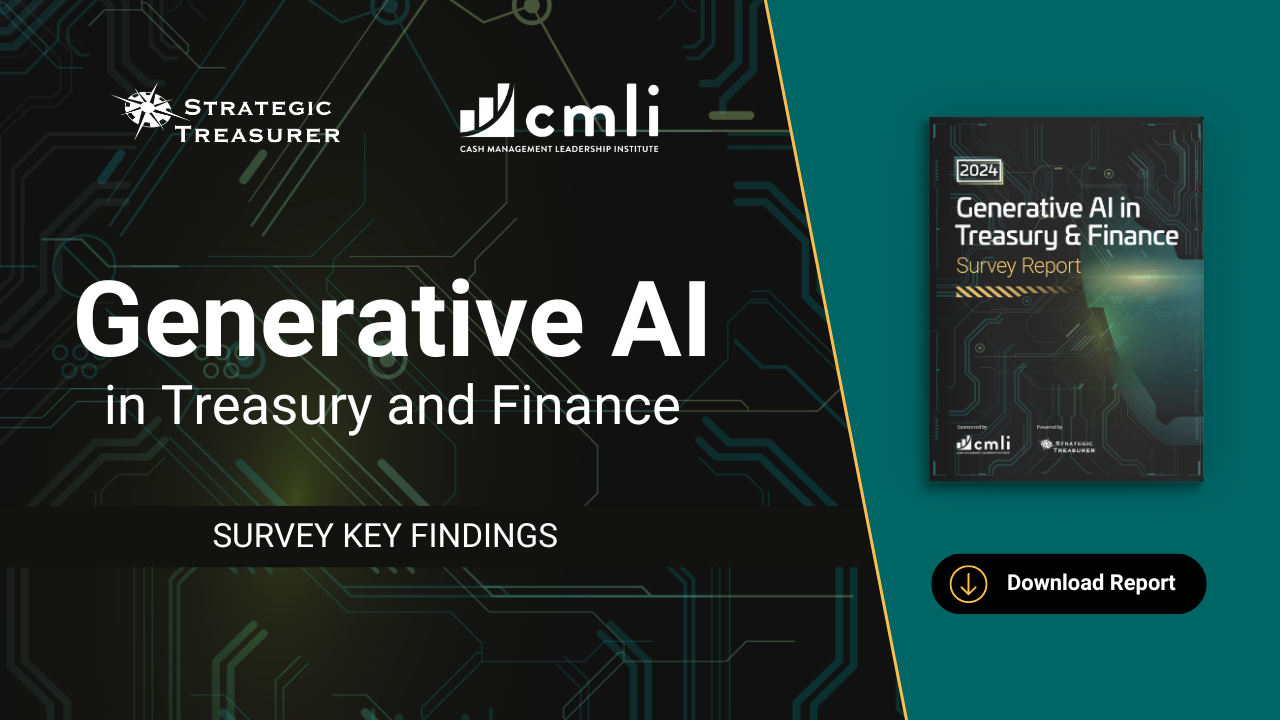
Generative AI in Treasury and Finance
Artificial intelligence (AI) has become one of the hottest topics for discussion of late. The growth of ChatGPT and Gemini has increased treasury professionals’ level of familiarity and has spurred additional thoughts and actions. The 2024 Generative AI in Treasury and Finance survey captured the current AI use for treasury activity, as well as future plans.
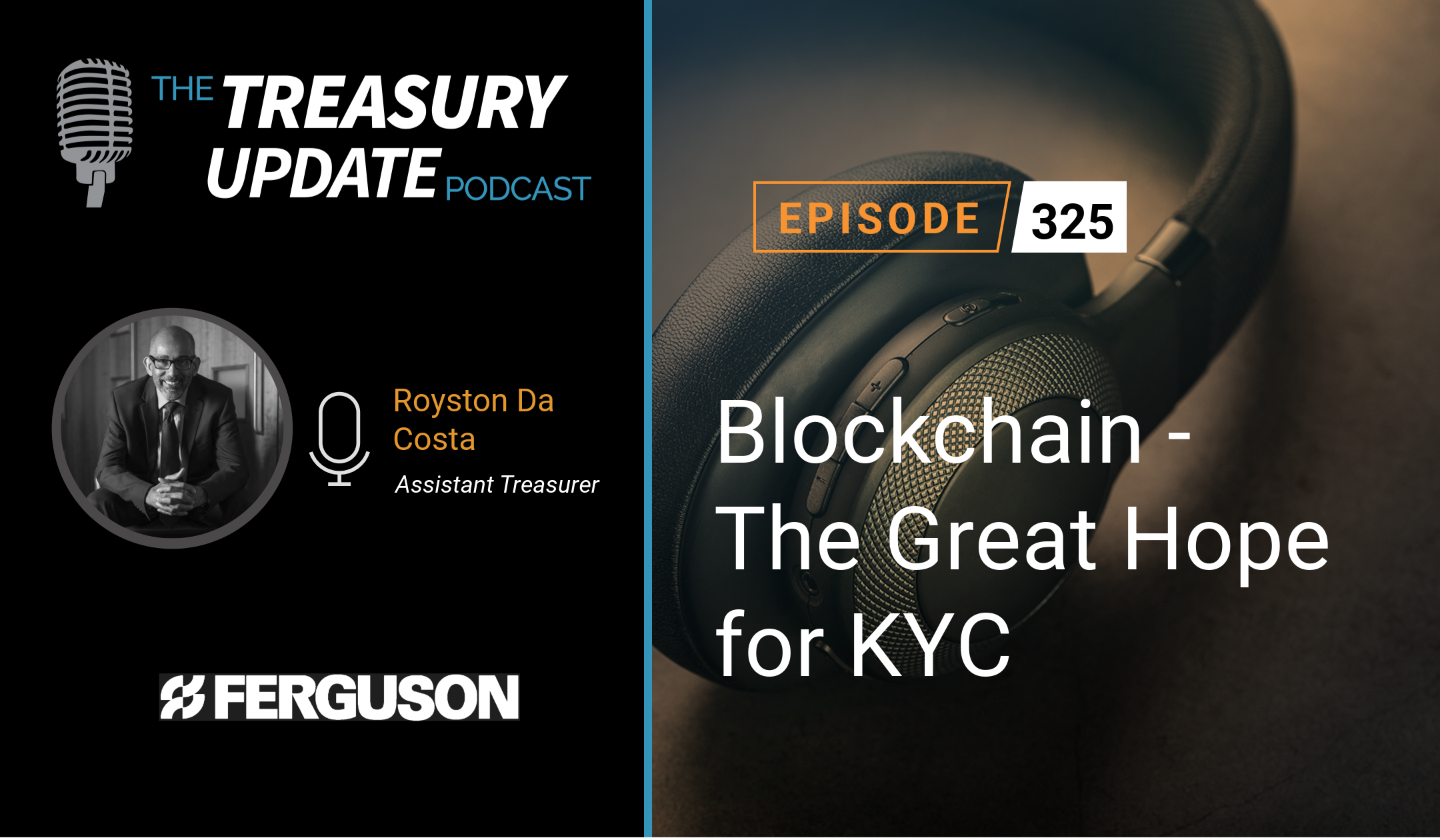
Blockchain – The Great Hope for KYC
In this episode, Craig Jeffery and Royston Da Costa discuss blockchain’s potential for revolutionizing KYC. They cover its benefits, limitations, and how it could enhance transparency. Craig reviews past tech predictions, and Royston shares his outlook on when blockchain might fully deliver on its promise, along with real-world examples.