
Treasury Resources
Webinar: Transaction Banking in 2026: What Your Peers Are Prioritizing Now | November 3
Drawing on the 2026 Transaction Banking Perspectives Survey, conducted this past summer, this webinar will explore what respondents are saying about the economic environment, changing client and payment needs, emerging technologies and risks, and the broader transaction banking landscape.
Workshop: AI Considerations and Uses in Treasury | October 28
This live, three-hour workshop will provide practical, finance-specific insight into how AI is being used today, where it is headed, and how treasury teams can prepare.
Webinar: Bank Account Management: Visibility, Control, and Compliance | October 20
This webinar will examine the current state of bank account management and explore approaches for improving governance, visibility, and control.
Webinar: Critical ACH Payment Security | October 22
Attendees will gain practical insight into where their organizations stand and the steps they can take next to address gaps, comply with the requirements, and strengthen ACH payment security.

Webinar: Payment Essentials: Keeping Up with Payments | October 15
Those responsible for payments must keep pace with accelerating developments. This fast-paced session will highlight major changes and shifts and provide a practical framework to help treasury teams stay current and respond effectively as the environment continues to evolve.

Cracking the Scammer’s Playbook
Cracking the Scammer's PlaybookScammers build trust, gather information, and manipulate communications to make fraudulent payment requests appear legitimate. This white paper examines the stages of the scammer's playbook and the leading practices treasury and payments...
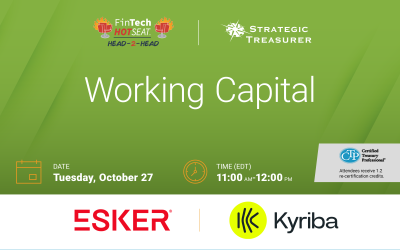
Fintech Hotseat Head-2-Head: Working Capital | 27 October
In this Head-to-Head session, providers will discuss how their solutions support working capital optimization in dynamic environments.
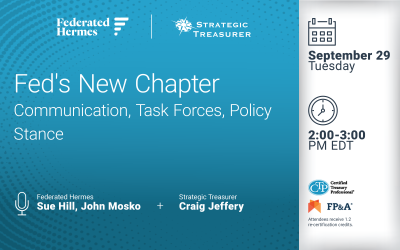
Webinar: Fed’s New Chapter: Communication, Task Forces, Policy Stance | September 29
Listen to a lively discussion that considers the impact of changes in communication, shifts in approaches, and what treasury should bear in mind in the second half of 2026 and into 2027.
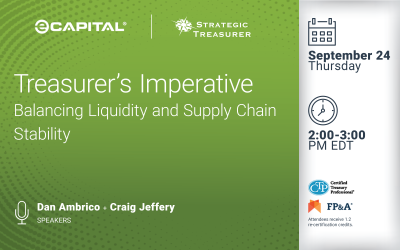
Webinar: Treasurer’s Imperative: Balancing Liquidity and Supply Chain Stability | September 24
In this session, we’ll examine how treasury teams are balancing liquidity goals with supplier stability while maintaining control over working capital.
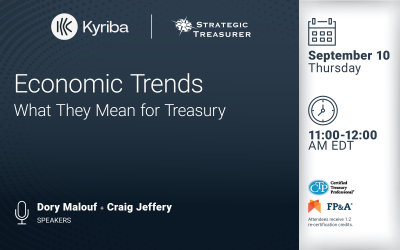
Webinar: Economic Trends: What They Mean for Treasury | September 10
This webinar will examine the economic trends shaping the current environment and their implications for corporate treasury. Attendees will gain perspective on key developments, areas of potential impact, and what treasury professionals should be watching as conditions continue to evolve.