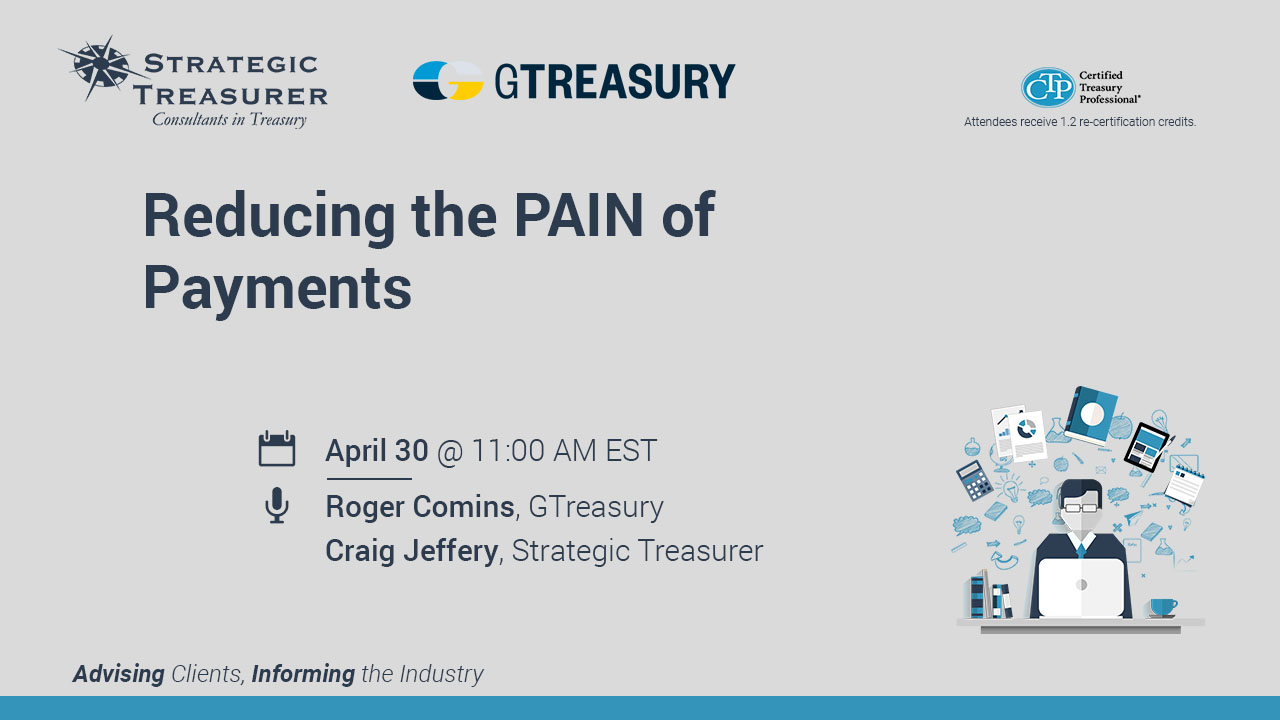
Join Strategic Treasurer and GTreasury for a live discussion providing a rapid assessment of the areas adding to the pain of payments and explore how to address these issues at the root level.
Reducing the PAIN of Payments Webinar
Co-presented by GTreasury
Date: Tuesday, April 30, 2019
Time: 11:00AM – 12:00PM EST
Where: This is an online event.

Join Strategic Treasurer and GTreasury for a live discussion as we assess several core treasury pain points for B2B payments and explore methods for solving these issues at the root level. This session will shed light on how to optimize manual payment workflows, manage current and emerging security and compliance demands, and solve global connectivity challenges. We will also include relevant case studies to highlight examples of how companies are overcoming these core payment challenges today.
1.2 CTP credits will be given for attendance to this live webinar.
View replay:
Download the deck from the webinar here:
[wpforms id=”29098” title=”false” description=”false”]
You may also be interested in:
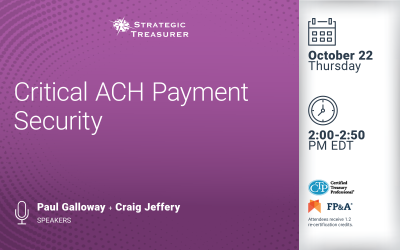
Webinar: Critical ACH Payment Security | October 22
Attendees will gain practical insight into where their organizations stand and the steps they can take next to address gaps, comply with the requirements, and strengthen ACH payment security.

Webinar: Payment Essentials: Keeping Up with Payments | October 15
Those responsible for payments must keep pace with accelerating developments. This fast-paced session will highlight major changes and shifts and provide a practical framework to help treasury teams stay current and respond effectively as the environment continues to evolve.
Fintech Hotseat Head-2-Head: Working Capital | 6 October
In this Head-to-Head session, providers will discuss how their solutions support working capital optimization in dynamic environments.