
Episode 417
AI Transitions: The Corporate View (Transform Labs)
In this episode, Craig Jeffery speaks with Ryan Frederick of Transform Labs about how artificial intelligence is reshaping corporate strategy, operating models, and the broader economy. They discuss AI investment, automation, AI operating systems, and why organizations should view AI as a business transformation initiative rather than simply another software tool. The conversation explores how companies can measure AI success through business outcomes, improve customer value, and rethink competitive advantage in an AI-driven economy.
Ryan also examines AI’s impact on jobs, organizational design, and leadership, arguing that companies should focus on redesigning workflows around AI agents instead of simply automating existing processes. The discussion includes practical guidance for executives on AI implementation, governance, use case prioritization, and building an AI operating system that can scale across the enterprise.
Host:
Craig Jeffery, Strategic Treasurer


Speaker:
Ryan Frederick, Transform Labs

Subscribe to the Treasury Update Podcast on your favorite app!



Related Resources
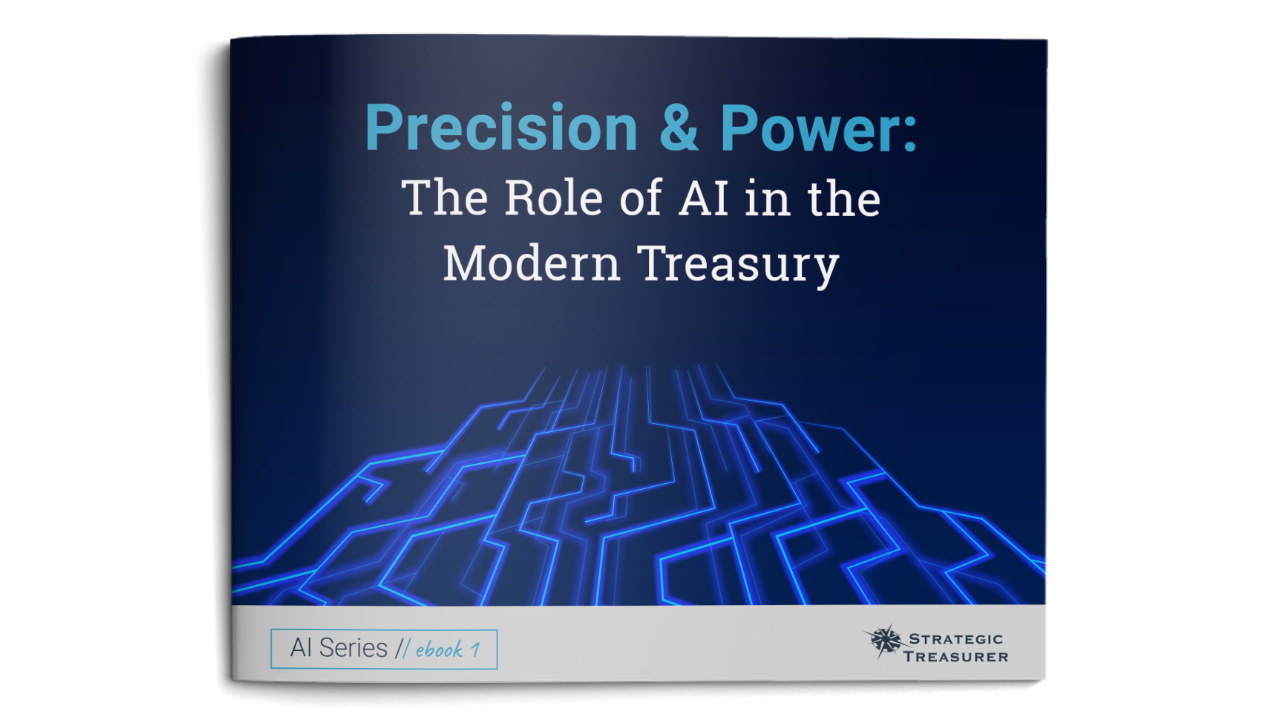
Precision & Power: The Role of AI in the Modern Treasury
This ebook provides treasury professionals with a foundational understanding of artificial intelligence and its practical implications for finance. Designed for those looking to engage with AI in practical ways that meaningfully and safely support business functions, this first installment in our series on AI offers clear explanations of key concepts and subtypes, including machine learning, generative AI, and agentic AI.
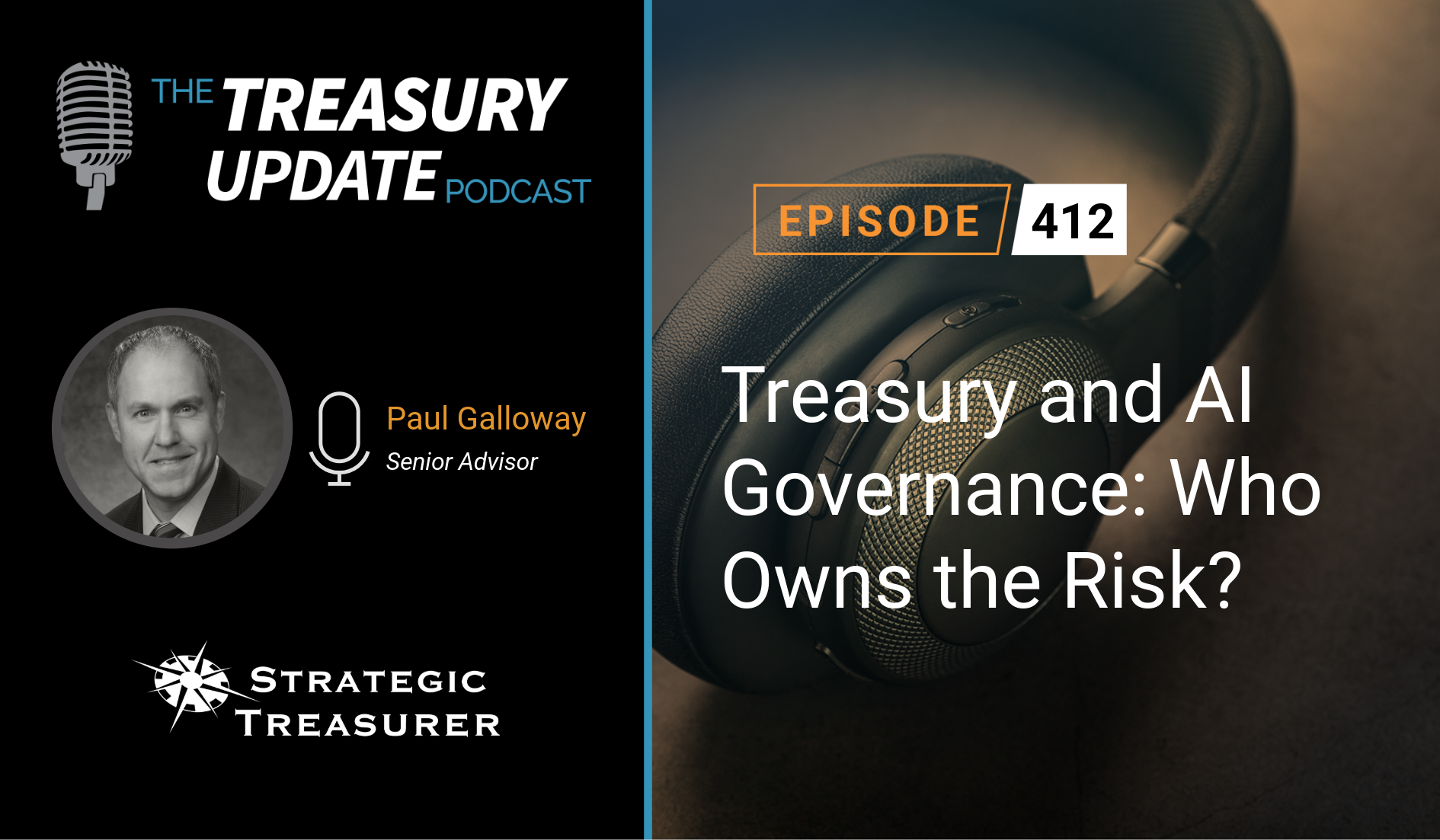
Treasury and AI Governance: Who Owns the Risk?
In this episode, Paul Galloway speaks with Craig Jeffery of Strategic Treasurer about AI governance, operational risk, and the growing role of artificial intelligence in treasury. They discuss how organizations should approach AI adoption thoughtfully, balancing efficiency gains with oversight, accountability, and data quality. The conversation explores governance frameworks, human-in-the-loop controls, explainability, anomaly detection, vendor risk, and why treasury teams must understand both the opportunities and risks associated with AI-driven tools and automation.