
Episode 324
What Can Corporate Treasury Learn from the Euro Banking Association?
In this episode, Craig Jeffery and Kate Pohl explore the role of the Euro Banking Association (EBA) and what corporate treasury can learn from it. They discuss EBA’s functions and its impact on the banking industry. Kate also shares how corporations in North America can engage with the EBA and benefit from its resources.
If you are not familiar with EBA or the Open Forum on Digital Transformation please have a look at the following links!
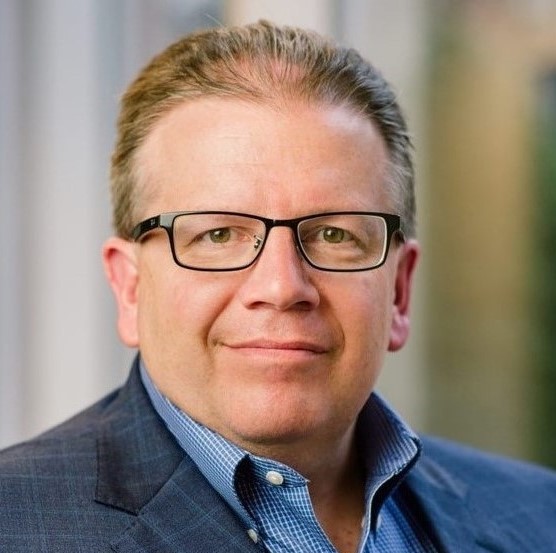
Host:
Craig Jeffery, Strategic Treasurer

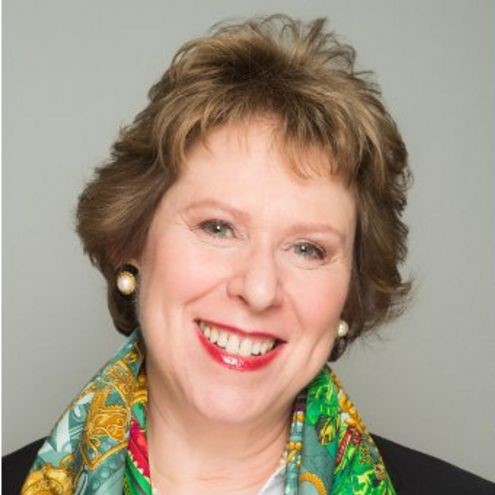
Speaker:
Kate Pohl, Projective Group

Subscribe to the Treasury Update Podcast on your favorite app!



Episode Transcription - Episode # 324: What Can Corporate Treasury Learn from the Euro Banking Association? transcript
Announcer 00:05
Welcome to the Treasury Update Podcast presented by Strategic Treasurer. Your source for interesting treasury news analysis and insights in your car, at the gym, or wherever you decide to tune in.
Craig Jeffery 00:19
Welcome to the Treasury Update Podcast. I’m Craig Jeffery, your host today I’m joined with a guest on this episode. Kate Pohl. Kate, welcome to the Treasury Update Podcast.
Kate Pohl 00:29
Well, thank you very much, Craig, glad to be here.
Craig Jeffery 00:32
Today’s episode is called EBA, place in the world. What can corporate treasury learn from the EBA? And I think it probably makes most sense to cover what did those those words mean? What is the EBA? Or how do you say it? What is it?
Kate Pohl 00:48
Ava? We finally refer to as Ava, but it’s the Euro Banking Association, and it’s part of, actually a larger organization which also has the AVA clearing, or the euro banking is, or the euro Banking Association clearing, which is a huge organization. We could talk about that later, but I’m part of the the simply the association, the smaller piece. We’re really here to help our members in many ways, maybe just mention the mission, and then, you know, see where we want to go from here. But the point here is to foster dialog, but also to support and experience and exchange. So in other words, how can we help these members when it comes to really, especially on the payment side, helping payments practitioners really creating, understanding, creating, formulating, debating, what is the Pan European vision for payments, and is done in a variety of ways.
Craig Jeffery 01:45
So you said that there’s the association, which is educational, and there’s the clearing maybe we could talk about clearing first, because it sounds like we’re not going to talk about that as much. But right? That’s pretty interesting. You know, to think about the clearing side, right? When you think about central banks, in a sense, there’s always a clearing portion, and maybe you could just explain what what that is.
Kate Pohl 02:07
But it’s really a very vital part of what’s going on in Europe today. So the it’s part of the European payment infrastructure. It’s definitely a provider, if you think about it, for clearing and settlement of payments across Europe, both large value payments, but also mass retail transactions. So Ach, I guess, in US language and the whole idea, originally, when it was founded, was to make payments more secure, more efficient, faster, etc. But it’s not just one thing, basically, Ava is divided into three pieces. Maybe just briefly explain that. I think it helps. So first of all, back one step. Ava is owned by a consortium of 50 major European banks. So it’s bank owned, and it was established in 98 so 1998 and based in Paris, the regulatory format, or the regulation that that actually is, is key for a by a by clearing is, of course, the ECB is the European regulator, and the three pieces, the first is called Euro one, and Euro one is a high value payment system, and it’s with net settlement at the end of the day. So it’s not target two, it’s not an RTGS, so it’s not a real time settlement, but it is a net settlement at the end of the day. Chips you have, if I remember correctly, it’s net settlement, but many times during the day, and this is at the end of the day. So high value payment system in Euros for commercial banks, financial institutions. Then you have step two. And by the way, Euro one is around, just to give you an idea, 200,000 transactions a day, about 200 billion runs per day in value. With step two, you have, this is really the low value Mass Payment, more ACH piece. So something like 50 million transactions a day, or something like 20 billion transactions per annum. And last but not least, you have in order to support the whole what you call real time, but we, what we refer to as instant payments, is the RT one. So the real time payment system, which is designed, devised and supports instant payments in euros 24/7, so the idea is that payments can be completed in under 10 seconds. So that’s the mission. And there, of course, the volumes are much less. End of 23 was about 20, excuse me, 10 million transaction transactions per month. So small but, but growing. And, you know, that’s a topic. I. Think we want to talk about another time, but that’s a it’s very interesting to watch that piece as well. You know, where is it? Where are instant payments going? And how is that actually driving everything, you know, including clearing systems, the thinking of the citizens and, of course, also corporates. So that in a nutshell, is Ava clearing.
Craig Jeffery 05:20
I like that, yeah. The sometimes the use of things like real time, since there are real time payments, it gets messy. Do we call them immediate? Do we call them instant? Do we call them, yeah, yeah. So.
Kate Pohl 05:30
And what, and what is instant, you know, is it is instant, two seconds, 10 seconds, you know, five minutes, what is? What is really instant?
Craig Jeffery 05:39
I’ve heard quite a bit people say under seven seconds or under 10 seconds, that seems to be instant, as opposed to minutes, as opposed to, you know, minute, minutes is not instant, maybe under 10 seconds. What? What can we agree on? Kate.
Kate Pohl 05:55
Well, in Europe, it’s 10 seconds. So that’s absolute, except for the fact, when do those 10 seconds start? And I’m not going to go into it now, because then we’d be talking about an hour, but I know we’ll talk about it again sometime.
Craig Jeffery 06:11
That’s awesome. Yeah, you mentioned the the AVA part, the the training, the the member information, you said, you said it’s, it’s owned by, this is a bank consortium owned by 50 banks or so.
Kate Pohl 06:22
The clearing is actually owned by 50 major banks. The association has members, and there’s almost, there’s about 160 plus members. Maybe that’s a good place to start, if I may, just to tell you a little bit about how the membership looks.
Craig Jeffery 06:40
Yeah, go ahead. If you, if you explain that.
Kate Pohl 06:42
I’m going to tell you about the membership, and then I’m going to do a discourse and how I got there, because it’s sort of, you know, the the long and winding road, but yeah, so I looked into it myself, just to make sure I had the numbers right. Things change, of course, but it’s about, I It’s a little over 160 members, almost 170 of which about 100 members are banks. So it’s banks. It’s not just European banks, as it were, but are banks that have that are based in Europe. So of course, you have a JP Morgan. That’s part of ABA. It’s very much their activities within Europe. The members are from 21 countries, and that, since 100 of course, is not 170 who else is there? So there it breaks down. And I also check this out, to be exact. So we have seven FinTech partners. We have one academic partner, so University Think Tank, we have, then what they call premium ecosystem and standard ecosystem partners. And what that really breaks down to is the whole payment provider landscape. So you have clearing and settlement providers, you have system integrators, you have financial service providers, network messaging operators, it consultancies, associations. So in other words, going back to my point, the whole mission was, if we’re fostering this dialog and we’re supporting members, and we can get into what that really means to create a Pan European vision of what payments should look like and how they could be regulated and what they should evolve into, then you really need, you know, a universe. It’s not just the banks, but it has to be everyone that’s part of this payments process.
Craig Jeffery 08:30
So there’s a huge focus on on payments, of course, and education. I know you’ve told me before, it’s not a lobbying organization. They represent the industry, but they’re not a lobbying organization. What does this? What does that? What does that mean? Practically, that representation/
Kate Pohl 08:47
There’s four pillars, the first and the part I belong to, and is thought leadership. So if we think about it in terms of pillars, the it’s, it’s, it’s really thinking about, if you will, open finance, digital currencies, liquidity management, digitalization. So in other words, forums that people can discuss. Papers are produced. Discussions are had it. The idea is to help the members on topics that they’re really interested in. You know? What does this mean? How can we cope with it? You know, what’s the best route to take? What do we need to be aware of? Things like that? The second pillar is, and it it’s a little fluid, but if I would say so, market practices and regulatory guidance. So here, you won’t be surprised. You know, there’s been a lot of work done on KYC because the members wanted to really say, you know, is there, is there an optimal KYC process or fraud? The fraud taxonomy that’s been put together by the EBA, the ABA Association on it’s a whole framework that was provided to banks working in a working group. Putting it together with members to say, what is the best way to handle and fight fraud request to pay? What should it look like? How should it be defined? So there is actually a payment methodology or an actual payment process. Then you have the networking and events, which includes eBay, which is a conference once a year, 2000 folks from all over Europe and plus, plus come to discuss and debate, always in a very exciting two days. Then you have business forums and different road shows. And then finally, last but not least, there’s the whole truly education and training. Up until now, it’s been more discussion and working together and trying to create and coming up with ideas and papers and standards. And now it’s really a training so they have literally, summer school, winter school, global seminars on different topics so members can learn these, these points that I’ve discussed. They want to know more about it. They perhaps more junior or coming from a different place in their career, and they want to learn.
Craig Jeffery 11:12
Let me make sure I captured them right, because seemed like there was a lot there was the thought leadership, the market practices and regulations. Was it networking events was number three?
Kate Pohl 11:22
Thought leadership and innovation. Number one, market practices and regulatory guidance. Number two, networking and events. Number three, and training and education, number four.
Craig Jeffery 11:34
Perfect. I was, I was trying to, I was trying to write everything down. But there was, there was, there was a lot of good stuff there. Maybe this is a good, good segue for a quick introduction of you and your role. What do you do and what do you do, with regards to Ava?
Kate Pohl 11:50
I have one of these, you know, long and varied backgrounds, but I was a banker for, you know, more than 30 years in commercial banking with strong points in payments, surprisingly or not surprisingly, Ava, we’ll get to that. Payments, trade, trade finance and risk. I went freelance about five years ago now a little bit more. Enjoyed it very much, but I guess you could say I was approached and I decided to work full time with projective group, which is a European consultancy with five different practices, including data transformation, risk and compliance and payments. So I do that by day, and I also continue to for it’s been now five years, more than five years, have been working together with with the Euro Banking Association, so with Ava to provide the open forum on digital transformation. So we in those pillars, we’re part of the thought leadership and innovation piece, and three times a year, we do a day’s worth of forum with different topics and different speakers. And as you said, You’ve been part of this. What we’re looking to do is really again this thought leadership is really important, discussion, questioning, but also listening, bringing, I try to bring in speakers and look at topics that aren’t every day or that you don’t see everywhere. You know, we look. We’re looking at our last forum of the year is on December 4, and what we’re going to do is a topic of looking, obviously, is what, what is coming next in the whole digitalization space. So going into 25 but a little bit of everything, so a little bit of pot pourri, you know, everything everywhere, all at once. But going into digitalization 25 and we’ll be looking at all kinds of different topics that are sort of exciting, thought provoking, things that our members and our guests really want to hear now.
Craig Jeffery 14:02
On these, these events, whether it’s training or it’s the AVA days or those different events. What? What’s the requirements for corporates? Can they participate? What can they participate in? And when do you recommend that? Right?
Kate Pohl 14:21
I wish we had more corporate participation, but you know, first and foremost, I think what we’re trying to do is help the practitioners really put the right products and services out there for their corporate on one side clients. So very, very important, also their retail clients. So both, both are considered as far as Corp goes, I think that corporates that want to influence the banks, corporates that want to hear about what’s going on, for example, you know, if I think of North America, but even if I think of Europe, what are the banks thinking? What are their issues? What’s coming down the pike? So it’s, I think it’s. A it’s interesting for for corporate to understand, especially on the if you will, on the regulatory side, in terms of fraud or new payment ideas that are coming up, sort of a thought leadership innovation. It’s not, it’s not a matter of showing what products and services that corporates directly will use, necessarily, but it is a little bit of a preview of what’s going on and the issues that you know the whole payment sector is coping with. So information, education, networking, learning, these are all possibilities.
Craig Jeffery 15:43
Yeah, that’s great. I like the description of those that want to influence the banks or learn what’s going on. That’s particularly useful.
Kate Pohl 15:52
Just maybe one one point I try as often as possible, and they love it is to get corporate speakers. Because, you know, banks in a vacuum, scary stuff, you know, creating products based on their ideas without really understanding what their clients are looking for. I mean, I’m not trying to throw stones. I’m not saying the banks are doing it specifically anymore, but the more corporate speakers I can bring on for this very heavily FI audience, they love it. They love to hear the voice.
Craig Jeffery 16:22
That makes perfect sense. I guess Kate too. We can drop some information in the show notes for whatever link to either one of those day events makes sense, or we just wanna make sure that people take the opportunity for that. I found it very interesting to listen through that and and participate. So.
Kate Pohl 16:42
The forum that I do is open. So very, very much open and appreciated. And, you know, welcome. So definitely, we should put that in the show notes, something like an ABA day as well. Some of the just, just to give you an idea, some of the activities are for members only.
Craig Jeffery 17:00
Sure, and is other restrictions. Can a corporate join as well? Become a member?
Kate Pohl 17:04
Yes, a corporate can join. The question would be whether it makes sense for them to join. I would almost say that if they want to participate in some of these, some of the groups that I mentioned, it might be very interesting. On the other hand, they might benefit even more by going to the functions that are open to them as I described.
Craig Jeffery 17:26
You know, we mentioned low value payments, high value payments. We related them to real time growth settlement systems, like in the US, the wire system fed Wow, or target two in Europe. What if they’re the corporation is maybe North American, but a multinational organization North America, that certainly seems to make sense for them to participate. What if they’re almost solely North America centric? Is that too much for them to participate in, or at least attend these things?
Kate Pohl 17:56
You know? I guess the question is, if they are completely domestic and there’s no interest in what’s going on in Europe, or, you know, it’s coming from Europe or going to Europe, perhaps less so. But I think anyone that has any international business or is trying to understand, for example, you know, what’s happening with CBDCs, you know, how is that? You know, we know that almost every central bank in the world is working on Central Bank currencies, you know, central bank digital currencies, and so is the US. But you know, some, some of the participants might be very interested to see, you know, how is that going in Europe, and how might that influence? Or, how might there be a, you know, back and forth, because we’re not just talking about one country, we’re talking about, you know, the European Union. So that might be interesting, for sure, in terms of the business, I think that anyone that has anything to do with Europe would certainly be interested in hearing on what’s what’s happening, regulatory wise, fraud wise, product wise, all the things that are going on, to understand how they might run their business, or run it more efficiently or effectively.
Craig Jeffery 19:09
Any final thoughts or any other resources you would point listeners to, whether they’re a bank or whether they’re a corporate?
Kate Pohl 19:17
You know, I’ve been looking at, you know, one of the, one of the studies that I do. I do scans on a lot of you know, product what’s coming down on the regulatory side. But I also look at different functions and conferences, and I it really depends, you know, the kind of thing that I’m very, very focused on is, does have more to do with payments or liquidity? Liquidity, treasury management within the European space. So again, I think it’s, I think it’s very much a question of where, whether the company is interested in or has a need to know about what’s going on in Europe, then some of this stuff will be very, very applicable. Of course, there are other. Yeah, there are other events as well, but I think that especially the open forum that we put together three times a year that I’m moderating, it’s also virtual, so that you can join no matter where you are in the globe. You know, you have, of course, you have a time issue. You might have to get up at three in the morning. But other than that, it’s, you know, it’s a very, it’s a very effective way, and a very efficient way, I think, to really learn what’s going on. And you can choose your you could choose your topics. As I say this time, we’re going to focus very heavily on where digitalization is going in different areas. You know, we’ll be talking about AI, we’ll be talking about fraud, we’ll be talking about Central Bank currency, we’ll be talking about it’s a whole potpourri, and indeed, how all of this is affecting and this might be interesting to audiences, and certainly in North America, how this is affecting workers and hiring and talent and the future of work. And what does it mean? Maybe a little bit European centric, but still, you know, these things have a knock on effect, so that might be of interest as well.
Craig Jeffery 21:08
Kate, thank you so much. So good to talk to you on this topic again. Appreciate you joining the Treasury Update Podcast.
Kate Pohl 21:14
Thank you so much for having me, Craig.
Announcer 21:22
You’ve reached the end of another episode of the Treasury Update Podcast. Be sure to follow Strategic Treasurer on LinkedIn. Just search for Strategic Treasurer. This podcast is provided for informational purposes only, and statements made by Strategic Treasurer LLC on this podcast are not intended as legal, business, consulting, or tax advice. For more information, visit and bookmark StrategicTreasurer.com.
Related Resources
Guide to Excellence in Treasury
Whether you’re aiming to become a treasurer, have just landed the job, or have held the position for years but are still seeking ways to improve and grow, this guidebook should have some ideas that will help you and your organization thrive.

Becoming a Treasurer Podcast Series
This series within The Treasury Update Podcast explores questions around being a successful treasurer. They include how to prepare, what needs to be measured, how to communicate effectively, how to develop a team, and how to get the resources needed.