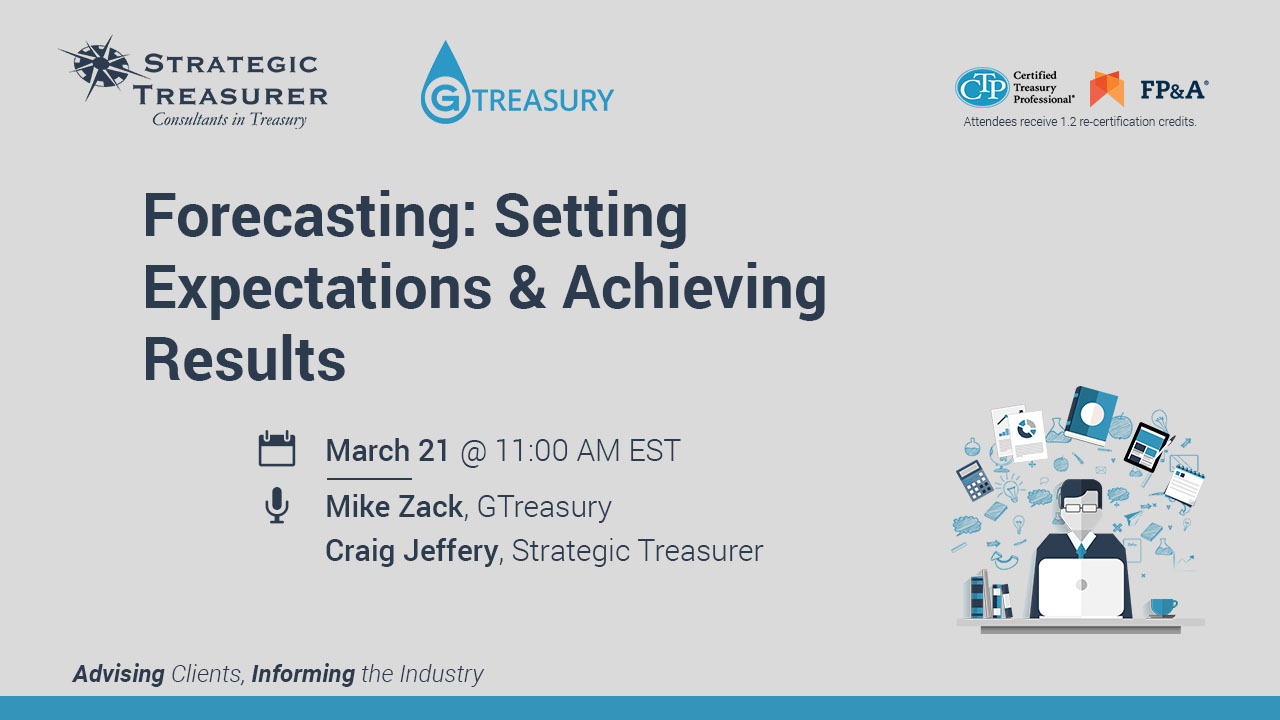
Join Strategic Treasurer & GTreasury in this live discussion on cash forecasting.
Forecasting: Setting Expectations and Achieving Results
Co-presented by GTreasury
Date: Thurday, March 21, 2019
Time: 11:00AM – 12:00PM EST
Where: This is an online event.

Everyone talks about cash flow forecasting. Improving the forecast is on nearly everyone’s yearly objective list, yet few rate themselves as excellent or even very good at forecasting. There are significant challenges in forecasting well. This session will help participants understand the context of good forecasting and explore how to overcome the major issues and challenges faced by many organizations. This will help attendees improve their forecasting processes and overall forecast.
1.2 CTP and FP&A re-certification credits will be given for attendance to this live webinar.
View replay:
[wpforms id=”29098” title=”false” description=”false”]
If you encounter any issues with the webinar, please contact our team.
You may also be interested in:
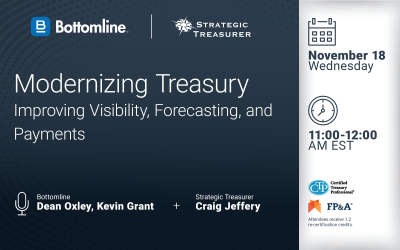
Webinar: Modernizing Treasury: Improving Visibility, Forecasting, and Payments | November 18
This webinar will explore how treasury teams can modernize cash and liquidity management through enterprise-wide access to bank data, more accurate forecasting processes, and greater use of real-time information.
Webinar: Treasury’s Q4 Playbook: Liquidity, Performance, and AI | November 17
This session delivers an actionable blueprint to de-risk refinancing walls, deploy battle-tested working capital maneuvers, and realize value from agentic AI.
Webinar: Transaction Banking in 2026: What Your Peers Are Prioritizing Now | November 3
Drawing on the 2026 Transaction Banking Perspectives Survey, conducted this past summer, this webinar will explore what respondents are saying about the economic environment, changing client and payment needs, emerging technologies and risks, and the broader transaction banking landscape.