
These roundtables are not a standard webinar format. They are designed to support a more focused and engaging environment where participants can interact with expert providers to ask questions and share experiences with fellow practitioners.
Space is limited. Access will be granted on a first-come, first-served basis. Please register now to reserve your seat!
Fill out the form below to request entry to these exclusive events.
Payment Security & Compliance
Date: Thursday, July 16, 2020
Times: 11:00 AM – 12:00 PM EDT
Where: This is an online event.
This virtual round table discussion will allow participants to engage on the topic of payment security threats, issues, methods of mitigating select risks, methods of systematically eliminating certain payment process exposures, and determining how to position your organization to support compliance around treasury and payments.
1.2 CTP re-certification credits will be given for attendance to this roundtable.
De-Risking Bank Account Management
Date: Tuesday, July 28, 2020
Times: 11:00 AM – 12:00 PM EDT
Where: This is an online event.
Every bank account represents a point of cost, exposure, and compliance requirements. Treasury must appropriately reduce those exposures to protect the organization’s cash and reputation adequately. The round table discussion will allow all the virtual participants to discuss core issues related to:
- Managing bank accounts and bank relationships
- Understanding exposures with bank accounts
- The minimum standard of care to protect bank accounts
- Methods of reducing the risk in the bank account management process
- What their peers have been doing overtime to strengthen their BAM and de-risk the process
1.2 CTP re-certification credits will be given for attendance to this roundtable.
If you encounter any issues with registration, please contact our team. It can take a few minutes for the confirmation email to come through.
You may also be interested in:
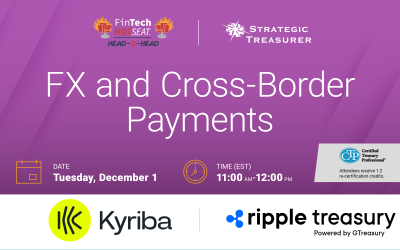
Fintech Hotseat Head-2-Head: FX and Cross-Border Payments | 1 December
Explore how various providers solve critical components of the FX lifecycle through integration, analytics, workflow management, ML/AI, business intelligence, and partnering. The session will address methods of supporting settlement and transparency across the globe.
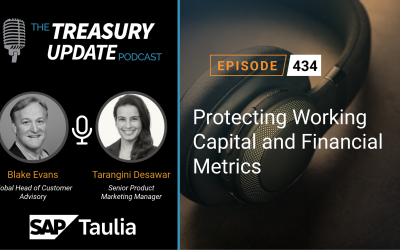
#434 – Protecting Working Capital and Financial Metrics (SAP Taulia)
Join Craig Jeffery and Blake Evans, Global Head of Customer Advisory at SAP Taulia, and Tarangini Desawar, Senior Product Marketing Manager at SAP Taulia, as they discuss balancing working capital goals with supply chain health.
Webinar: Modernizing Treasury: Improving Visibility, Forecasting, and Payments | November 18
This webinar will explore how treasury teams can modernize cash and liquidity management through enterprise-wide access to bank data, more accurate forecasting processes, and greater use of real-time information.