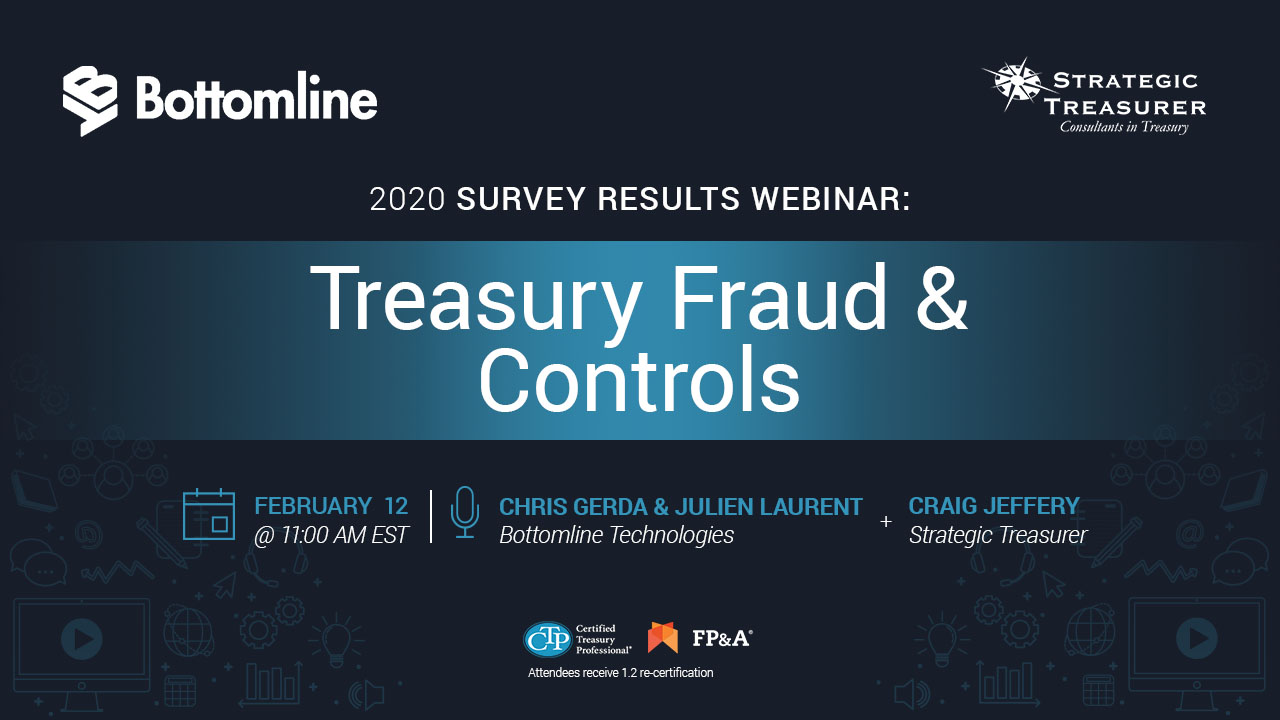
Join Craig Jeffery of Strategic Treasurer and Julien Laurent & Chris Gerda of Bottomline Technologies as they cover high-level highlights from the 2020 Treasury Fraud & Controls survey.
Treasury Fraud & Controls: 2020 Survey Results Webinar
Date: Wednesday, February 12, 2020
Time: 11:00 AM-12:00 PM EST
Where: This is an online event.

Download the webinar deck here:
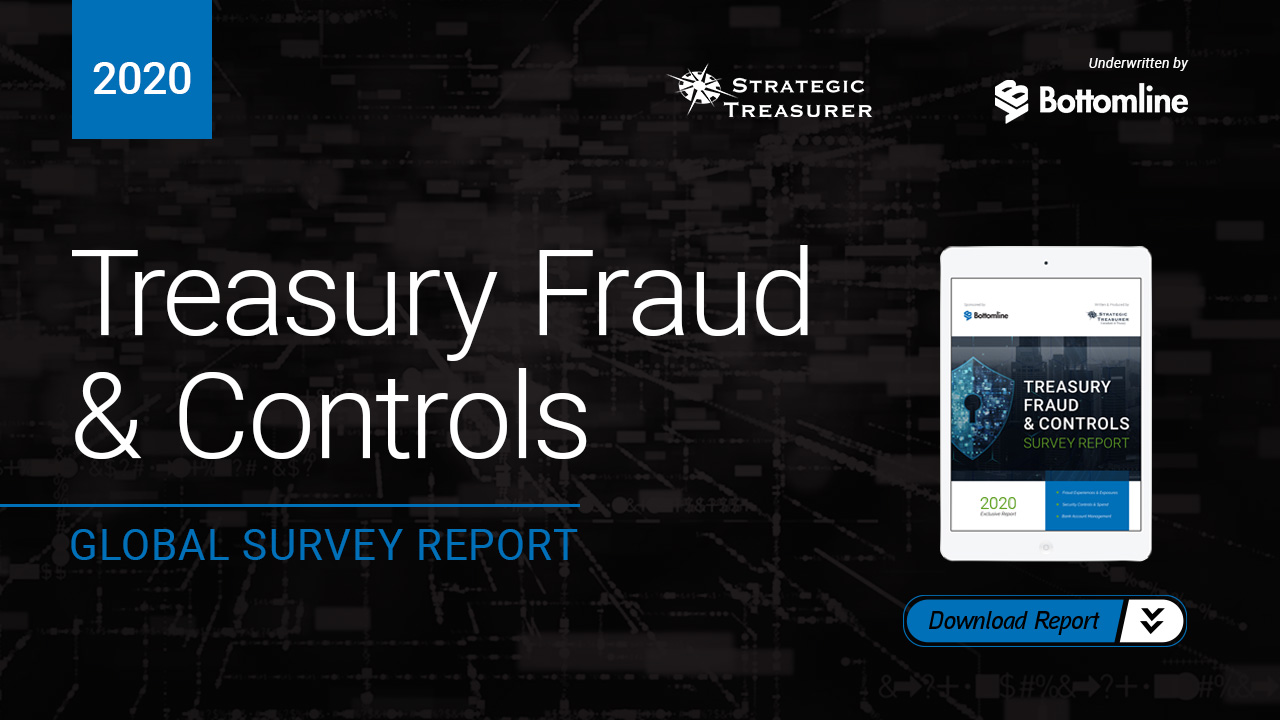
2020 Treasury Fraud & Controls Survey Report
With your help, we’ve consistently found that fraud is a top ranking concern for treasury. This year, as it has become a bigger issue worldwide, we discover how your experiences and practices have changed. Has your security framework been strengthened? Or are you still doing the same things, hoping you’re not one of the many corporates who have suffered a loss from fraud in the past year?
[wpforms id=”35488” title=”false” description=”false”]
You may also be interested in:
Webinar: Modernizing Treasury: Improving Visibility, Forecasting, and Payments | November 18
This webinar will explore how treasury teams can modernize cash and liquidity management through enterprise-wide access to bank data, more accurate forecasting processes, and greater use of real-time information.
Webinar: Treasury’s Q4 Playbook: Liquidity, Performance, and AI | November 17
This session delivers an actionable blueprint to de-risk refinancing walls, deploy battle-tested working capital maneuvers, and realize value from agentic AI.
#433 – Seismic Shifts in Payments: Fraud, Regulation, and Validation (SouthState Bank)
In this episode, Craig Jeffery and Wes Bryant of SouthState Bank explore the overlapping changes reshaping payments, from instant payment rails and richer ISO 20022 data to evolving fraud threats and Nacha requirements.