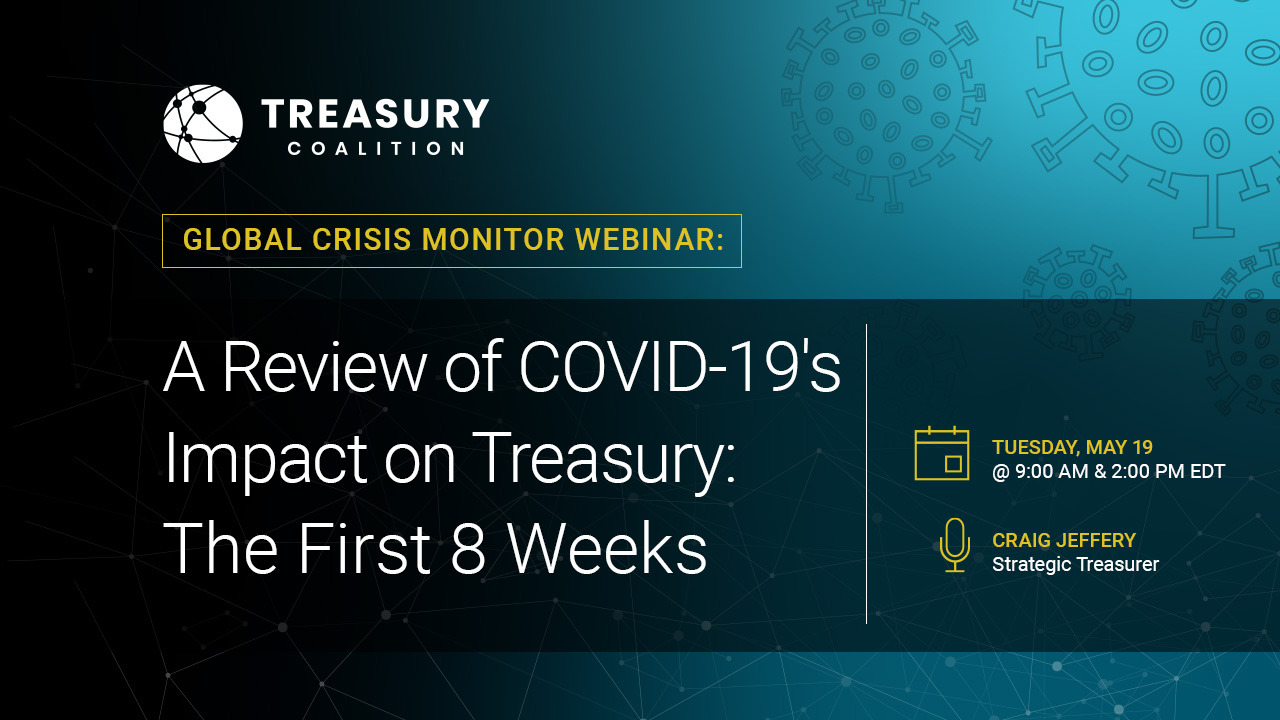
A Review of COVID-19's Impact on Treasury: The First 8 Weeks
Date: Tuesday, May 19, 2020
Times: 9:00 AM & 2:00 PM ET
Where: This is an online event.

Through weekly surveys data has been collected, analyzed, and distributed for the good of the industry. Specifically, the survey looked to gather concerns, response plans, and monitor economic preparations and impact changes throughout the pandemic lifecycle.
This webinar will review the results to date, dive into cross cuts of the data, and what organizations can do moving forward.
1.2 CTP and FP&A re-certification credits will be given for attendance to this live webinar.
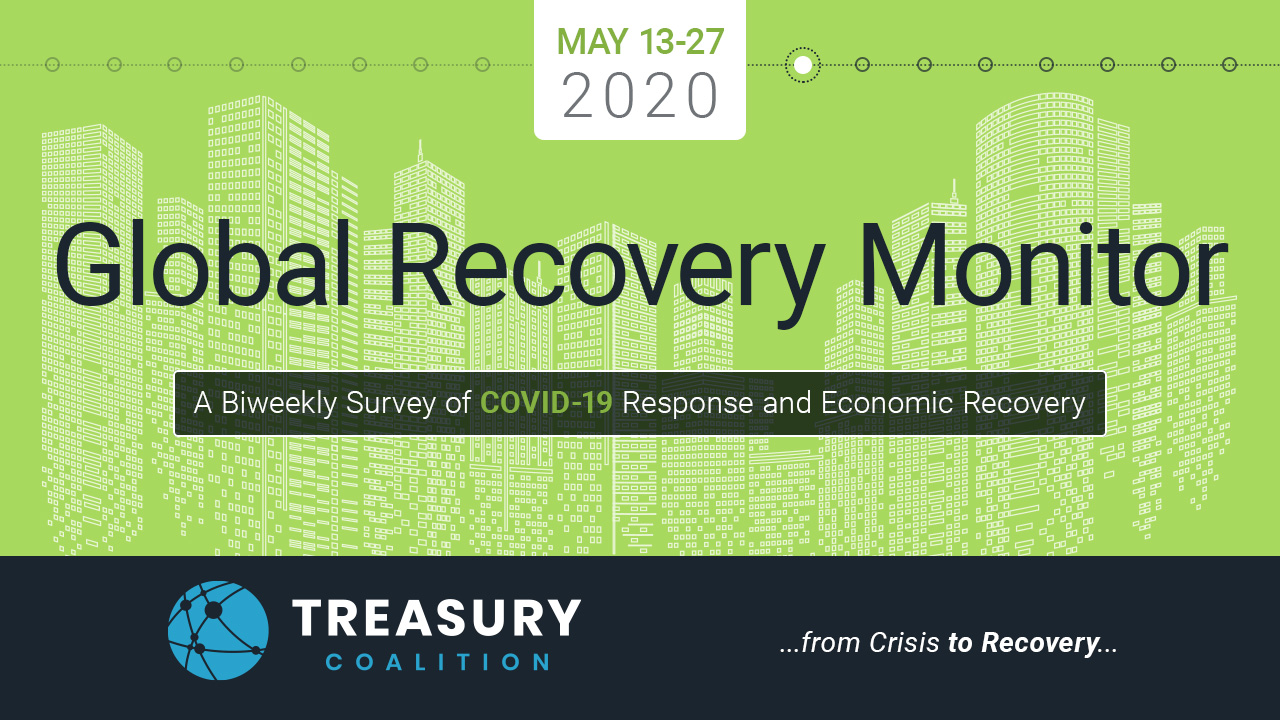
Global Recovery Monitor Survey
The Global Recovery Monitor provides rapid exploration and response reporting on major factors impacting treasury and finance organizations. This effort is supported by the Treasury Coalition which consists of leading solution providers leveraging their networks to ensure comprehensive results for the good of the profession.
Download the webinar deck here:
You may also be interested in:
#431 – Changes at the Fed: What Makes the Warsh Fed Distinctive (Federated Hermes)
In this episode, Craig Jeffery and Sue Hill of Federated Hermes discuss what is changing under Fed Chair Kevin Warsh following the September rate hike.
#430 – The Psychology of Bank Fee Management: Pain Avoidance and Relief (Open Fees)
In this episode, Craig Jeffery and Stephan Ireland of Open Fees examine why bank fee management is easy to avoid but costly to ignore.
Workshop: AI Considerations and Uses in Treasury | October 28
This live, three-hour workshop will provide practical, finance-specific insight into how AI is being used today, where it is headed, and how treasury teams can prepare.