The global economy requires the treasurer to understand the overall economic environment regardless of where the company operates (even if it’s just one country).

How can treasury and supply chain teams respond effectively to the challenges ahead of them?

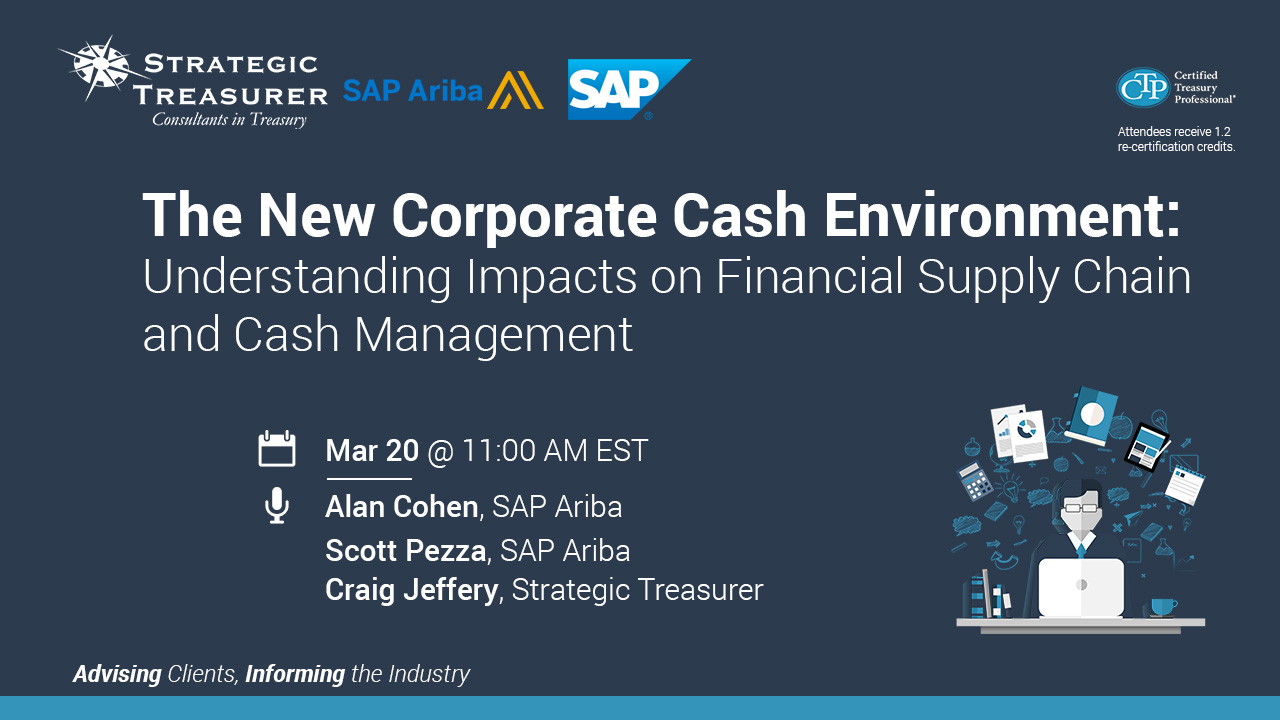
The New Corporate Cash Environment: Understanding Impacts on Financial Supply Chain & Cash Management

Co-Presented with SAP Ariba

Date:     Tuesday, March 20th, 2018

Time:     11:00AM – 12:00PM EST

Where:  This is an online event.

With changes in the tax rate structure creating a ripple of activities that affect the global economy, treasurers must take a more global outlook especially in looking at their cash management. These changes are affecting everything from tax repatriation to new investments. Rising interest rates (and expectations of the rates rising further from central banks) represent some of the challenges that are faced by treasurers.

This session will set a basis for understanding the impact of payment terms & dynamic discounting and include advice for the setup of the right type of governance. We will also touch on the optimization of corporate cash management through the financial supply chain and why it’s not just about who you pay but the processes and costs of how you pay them.

1.2 CTP re-certification credits will be given for this webinar.

View the replay:
Download the deck from the webinar here:
If you encounter any issues with the webinar replay or have questions about credits, please contact our team.

You may also be interested in:

Webinar: The Treasury Playbook: Improving Cash Conversion and Managing Supplier Risk with Supply Chain Finance | December 18

Webinar: The Treasury Playbook: Improving Cash Conversion and Managing Supplier Risk with Supply Chain Finance | December 18

Treasury teams are entering 2026 with increasing pressure on liquidity, credit availability, and supplier stability. In this fireside chat with eCapital, we will explore practical steps treasurers can take to accelerate cash conversion, strengthen supplier relationships, and maintain control in a shifting trade environment. The discussion will examine how tariffs and global trade policies are influencing working capital, and how a well-structured supply chain finance (SCF) program can enhance visibility, extend terms responsibly, and mitigate counterparty risk. We will also highlight how SCF and export-import finance (EXIM) can work together to support exporters and reduce trade exposure.

Webinar: Why T-Bills Matter Now: Positioning Cash for Market Resilience and Operational Readiness | December 11

Webinar: Why T-Bills Matter Now: Positioning Cash for Market Resilience and Operational Readiness | December 11

Market disruptions, from the 2008 financial crisis to the regional bank failures of 2023, reveal how quickly liquidity risk can threaten access to cash for treasury teams overexposed to leverage when markets tighten. What are the tools and instruments available to treasury teams that mitigate these liquidity and counterparty risks?

This session will provide a practical briefing on how treasury teams can strengthen their 2026 cash strategies and will explore the role of direct ownership of U.S. Treasury bills. Learn about different vehicles for access, common value leaks that erode returns, and how technology and automation can simplify access, settlement, and liquidity oversight.

Webinar: GENIUS Act: Overview, Survey Results, and Implications | December 16

Webinar: GENIUS Act: Overview, Survey Results, and Implications | December 16

Join us for an in-depth webinar examining the implications of the GENIUS Act for the treasury and finance community. This session will provide a comprehensive overview of the legislation, exploring its potential effects on innovation, payments modernization, data governance, and operational efficiency. Craig Jeffery and Paul Galloway will discuss key considerations for organizations as they assess readiness and compliance, exploring how the act could shape industry practices in the years ahead. The discussion will also incorporate insights from our recent GENIUS Act Survey, providing a data-driven look at current levels of awareness, anticipated challenges, and expected adoption rates.