
Banks and fintech-oriented trade firms both vie for attention for corporate treasurers and have approached the relationship from different positions of strength.
Resolving the lack of available capital takes more than just a consideration of the core payables and receivables processes.
Digitalization of Trade Finance: Opportunities for Banks and Corporates
Co-Presented with Finastra
Date: Tuesday, March 27th, 2018
Time: 2:00PM – 3:00PM EST
Where: This is an online event.
Many organizations have significant amounts of capital tied up in their trade finance processes. In order to resolve this, it requires an analysis of one’s technology infrastructure. What efficiencies can be gained through digitalization of an organization’s trade processes? What obstacles are slowing change in this area and how can they be overcome? It is possible that reading more about digital transformation would prove to be wise.
This panel-type session will explore how newer digital tools and approaches represent an opportunity to optimize working capital management through an expanded perspective of trade finance.
1.2 CTP re-certification credits will be given for this webinar.
View the replay:
Download the deck from the webinar here:
If you encounter any issues with the replay or have questions regarding credits, please contact our team.
You may also be interested in:
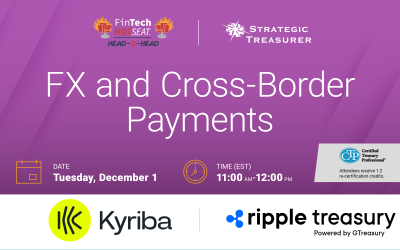
Fintech Hotseat Head-2-Head: FX and Cross-Border Payments | 1 December
Explore how various providers solve critical components of the FX lifecycle through integration, analytics, workflow management, ML/AI, business intelligence, and partnering. The session will address methods of supporting settlement and transparency across the globe.
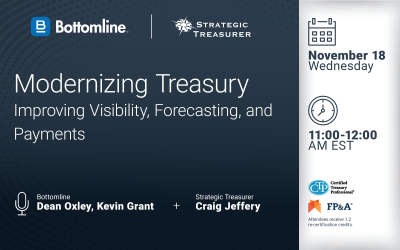
Webinar: Modernizing Treasury: Improving Visibility, Forecasting, and Payments | November 18
This webinar will explore how treasury teams can modernize cash and liquidity management through enterprise-wide access to bank data, more accurate forecasting processes, and greater use of real-time information.
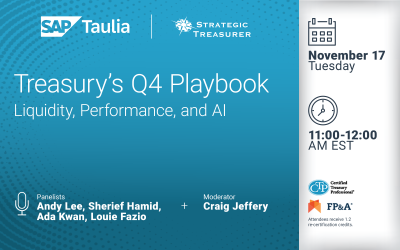
Webinar: Treasury’s Q4 Playbook: Liquidity, Performance, and AI | November 17
This session delivers an actionable blueprint to de-risk refinancing walls, deploy battle-tested working capital maneuvers, and realize value from agentic AI.