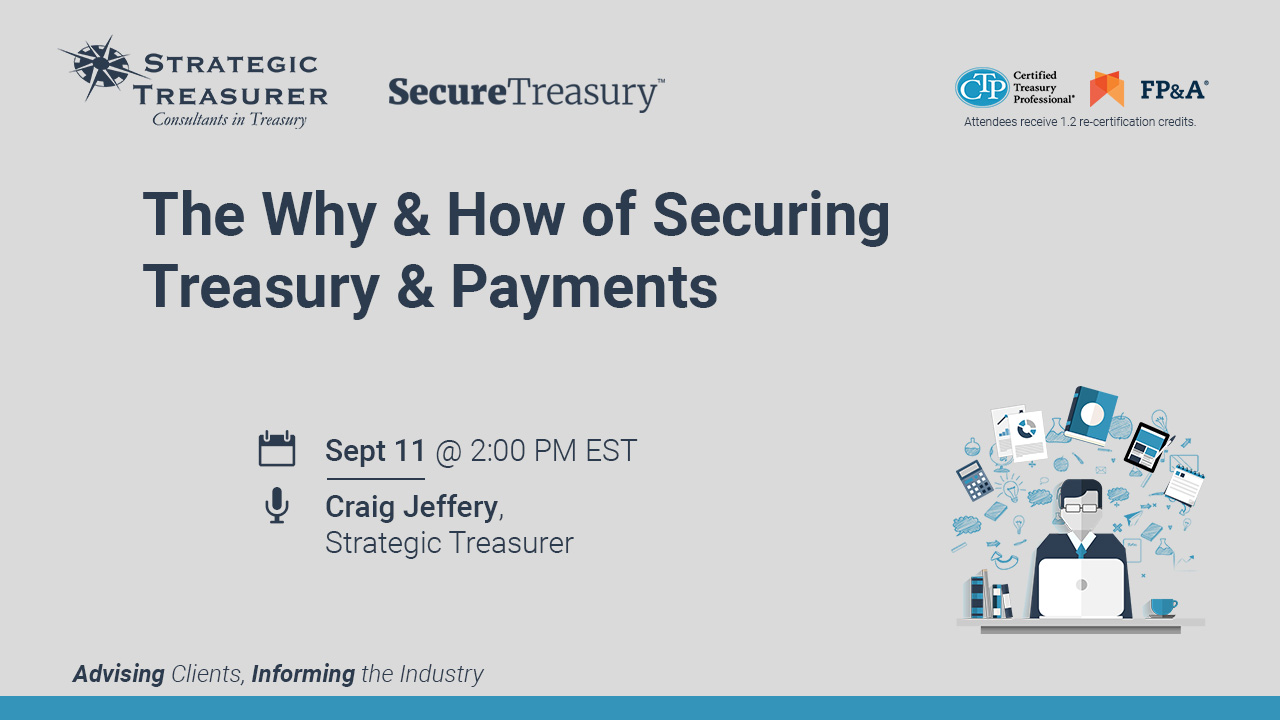
The Why and How of Securing Treasury and Payments
Date: Tuesday, September 11th, 2018
Time: 2:00PM – 3:00PM EST
Where: This is an online event.

This webinar will explore the dramatic increase in fraud that has occurred within the financial environment and examine how new technologies have given way to the creation of more sophisticated criminal techniques. The presentation will also identify common areas of exposure that exist within organizations today and, finally, analyze specific methods and strategies that financial practitioners can employ to protect themselves.
1.2 CTP and FP&A re-certification credits will be given for attendance to this live webinar.
You may also be interested in:
Webinar: Modernizing Treasury: Improving Visibility, Forecasting, and Payments | November 18
This webinar will explore how treasury teams can modernize cash and liquidity management through enterprise-wide access to bank data, more accurate forecasting processes, and greater use of real-time information.
Webinar: Treasury’s Q4 Playbook: Liquidity, Performance, and AI | November 17
This session delivers an actionable blueprint to de-risk refinancing walls, deploy battle-tested working capital maneuvers, and realize value from agentic AI.
Webinar: Transaction Banking in 2026: What Your Peers Are Prioritizing Now | November 3
Drawing on the 2026 Transaction Banking Perspectives Survey, conducted this past summer, this webinar will explore what respondents are saying about the economic environment, changing client and payment needs, emerging technologies and risks, and the broader transaction banking landscape.